The scoring is where an asbestos survey is really made or ruined, and it is why training matters more than a ticket.
Let me show you how two properly qualified surveyors can look at the exact same material and come back with completely different results. This is the part of the job the client never sees, but it is the part that decides what you end up paying and how safe the building actually is.
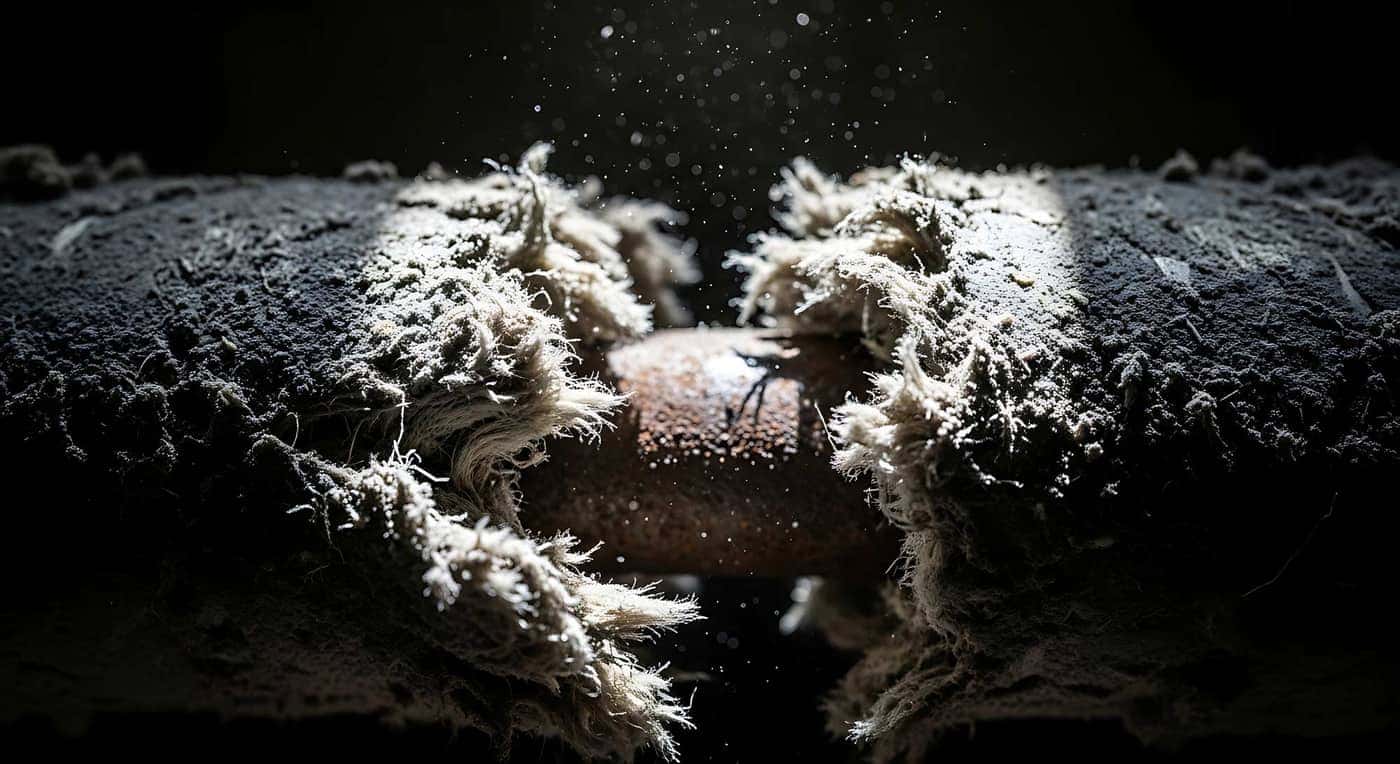
Picture a room with some asbestos insulation board forming a beam cladding. One surveyor goes in, scores it as medium damage, notes it is painted in places, and measures it at twenty square metres. Fair enough. Now, because we have put that surveyor through a proper induction and spent real time on material and priority assessment training, the next of my guys who walks into that room should see it more or less the same way. But if that training has not been done properly, the next surveyor goes in and calls it high damage because he has spotted a few chunks out of it, reckons there is less paint than there is, and measures it at thirty square metres instead of twenty. Same board, same sample, same lab result, yet a very different score.
Why does that matter so much? Because the material assessment and the priority assessment scores combine to form a total risk score, and that score determines where the item sits on your management plan and what you actually do about it. Get it wrong, and you can turn something you would simply keep an eye on every six months to a year into something that reads as requiring immediate removal, running into thousands of pounds. Or it goes the other way, and a real problem gets scored as something to manage. That is the difference good training makes, and it is why the analytical side has been developed the way it has.
Now, people ask me whether higher-risk materials are deliberately misclassified to avoid the licensing trigger. I will be honest, that is not really my experience. I think it is poor surveying dressed up as something more sinister. The HSE actually closed that door years ago. We used to be able to report trace amounts, this many percent, that many percent, and that did let people argue an item was negligible and avoid making it notifiable. We have not been allowed to do that for a good ten or eleven years now. If it contains asbestos, it is notifiable, end of.
And on the big jobs, misclassifying something is a huge risk with no reward, because removing it is a massive piece of work whatever label you stick on it. So no, I do not buy the idea that it is widespread cheating. It is mostly about training and technique, and that is a fixable problem the moment you use the right people. We have picked up exactly that on re-inspections across London and the South East, where the same material had been scored two very different ways.